Forests are unforgiving factories. Machines work on slopes, sink into muskeg, slam into stumps, and run full tilt for twelve to sixteen hours a day. If a weld lets go at 2 a.m. on a winter block road, you can lose a full day’s production and a week of goodwill. That is why logging equipment fabrication revolves around two realities that never blink: impact and fatigue. Every bracket, boom, frame, and guard has to stand up to sudden hits and also to millions of smaller cycles that slowly pry materials apart. A metal fabrication shop that understands both can save operators money they never see on a spreadsheet because the gear never fails in the first place.
I have spent enough time under machines with a magnetic drill and a trouble light to respect the basics. The right steel in the right place, the correct weld geometry, sensible load paths, and attention to access for maintenance are worth more than flashy options. When we get those decisions right, the rest follows: predictable lead times, fewer rework hours, and safer crews.
What “impact and fatigue” really mean in the bush
Impact shows up as sudden, short-duration loads that dwarf the rated working load. Think a processor head catching a butt flare, a skidder blade taking a rock, a swing bearing seeing a jolt when a log slips. Strain rates spike. Weld toes become crack starters. Pins peen over. In design terms, impact rewards ductility, generous radii, and reinforcement close to the load.
Fatigue is sneakier. Even when you keep stresses below yield, cyclic loading initiates micro-cracks that grow with each pass. Grapple tines, delimber arms, and track frames live here. The failure rarely comes during the worst hit. It shows up after months, in the middle of a normal cycle, at a weld toe or a bolt hole that was punched instead of drilled. That is why good fabricators who work with logging equipment take surface finish, hole quality, and post-weld treatment seriously.
Choosing steel for the job, not the catalog
Material choice makes or breaks a part long before it hits the press brake. In logging equipment, the usual palette includes mild steels for brackets and guards, quenched-and-tempered plate for wear parts, and high-strength low-alloy (HSLA) for frames. Often the best structure mixes them.
- A processor knife that needs to resist gouging and compressive impact belongs in a tough, through-hardened plate. Abrasion-resistant grades are tempting, but some lose toughness in the heat-affected zone and crack under shock. If we use AR, we keep welds out of major impact areas or add soft interlayers. Track frames and booms benefit from HSLA with yield strengths in the 350 to 700 MPa range. A Canadian manufacturer supplying northern fleets often keeps 44W/50W and a few Q&T sheets on hand so a custom machine does not stall for material. Pin bosses and bushings want clean, machinable steel for concentricity. Cladding and induction hardening can give wear life without turning the whole boss brittle. Guards see constant strikes and flex. Mild steel with deep, continuous fillets often outlasts high-hardness plate with hairline cracks, especially near corners.
A good manufacturing shop will ask where the part lives on the machine and how it fails. We keep a scrapped-part wall for that reason, tagged with hours to failure and notes on why. The wall teaches more than any brochure.
From build-to-print to design-for-fabrication
Many forestry OEMs and contractors come to a metal fabrication shop with build-to-print packages. We run them as specified and document any deviations. But even on build to print jobs, there is room to suggest improvements that do not change form or fit. A small note on a print can save a season.
- Swap punched holes for drilled or reamed holes in fatigue-critical joints. The cost delta is small, the life gain is large. Add runout tabs for weld starts and stops. Removing them after welding gives a smoother toe and fewer crack initiators. Tighten bend radii to match available tooling and prevent micro-cracking at the outer fibers, especially on cold days. A minor bend relief, properly placed, prevents tear-outs. Specify the exact filler wire for mixed-grade joints. On booms, matching hydrogen control and toughness matters as much as ultimate strength.
When a customer is open to a custom machine or a custom fabrication instead of strict replication, we can bring in our industrial design company partners and run a short, practical loop: hand sketch, simple finite element check, CNC metal cutting trials, then weld test coupons. That keeps the fancy modeling grounded in shop reality.
Geometry that forgives real life
Fatigue lives at the edges. Cracks rarely start in the middle of a perfect plate. They start at toes, corners, and holes. Good geometry deals with that.
- Avoid sharp transitions. Step changes in thickness should taper over a distance at least two to three times the thickness difference. The same is true for stiffeners that stop short. A mousehole or soft end radius reduces stress risers. Keep welds out of high stress lines when you can. If a plate does the heavy lifting, move the seam to a neutral zone and use a backing strip where allowed. Use double-sided fillets rather than a single, huge fillet on one side. Balanced welds shrink evenly, reduce distortion, and often perform better in fatigue. Channel impact into replaceable elements. On a delimber arm, a sacrificial pad or bolted lug can take the hit and be swapped in an hour. It is cheaper to stock four lugs than one arm.
Details like these add minutes in CAD and a small amount of mass, but they pay back when the machine hits a hidden stump in deep snow and keeps working.
Welding toward toughness, not just strength
If impact and fatigue are the enemies, hydrogen and stress concentration are their allies. Welding controls both. The habits that separate good welding company practice from average show up in winter:
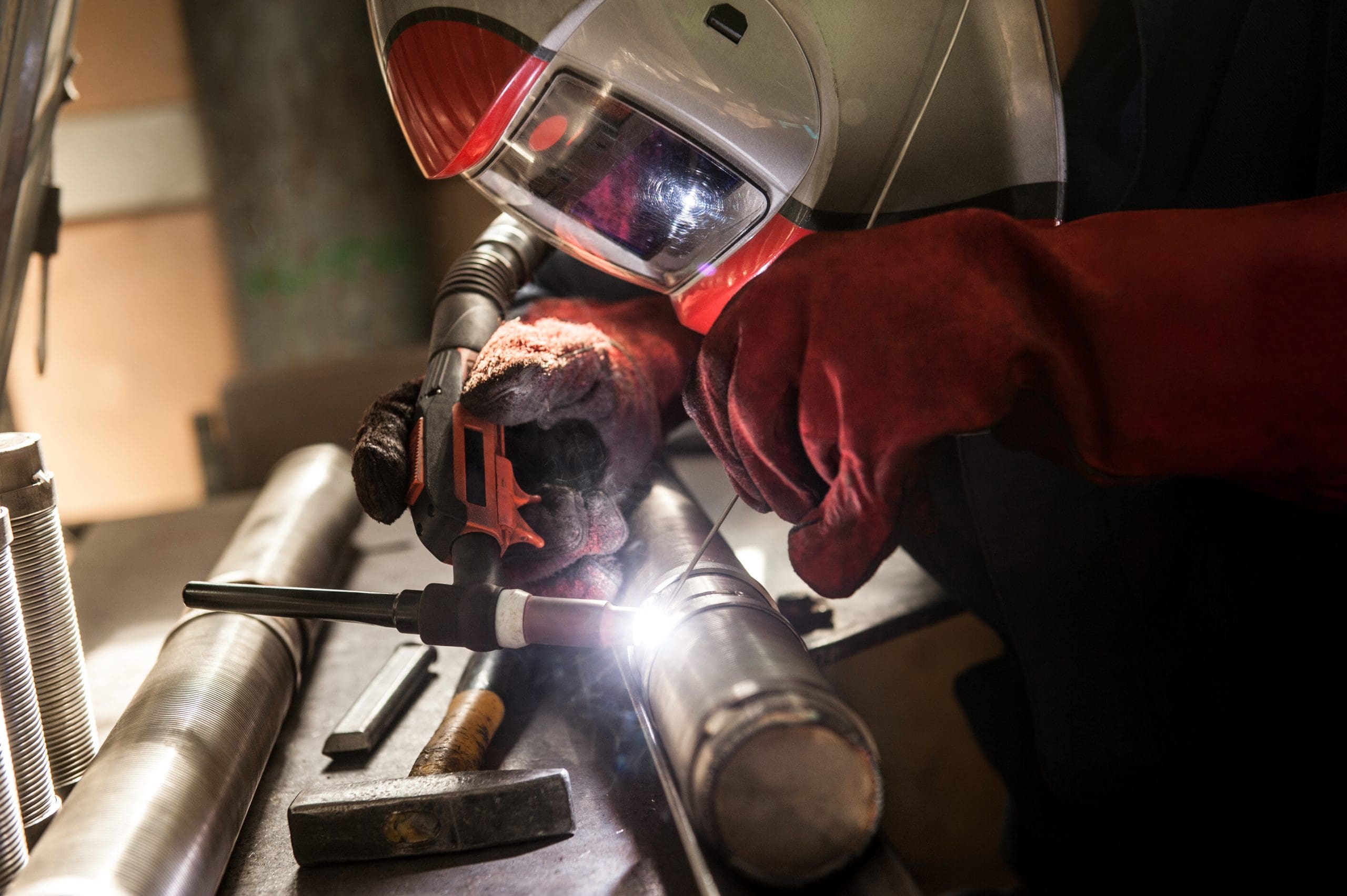
- Preheat in the field matters. A 20 mm thick HSLA lug at -15 C without preheat is begging for cold cracking. In the shop, we use induction blankets, temperature sticks, and controlled cooldown. In the bush, we carry propane heaters and respect interpass requirements. Joint prep should fit the process. A sloppy gap filled with wire is not a joint, it is a stress concentrator. We use templates and scribe lines, especially on repetitive parts, to keep consistency across batches. Clean, low-hydrogen consumables, stored correctly. Sounds basic. It is not basic when a night shift opens a wet box. Baking rods and tracking open time is dull, but it keeps cracks out of your Monday. Peening and grinding strategically. In true fatigue joints, a light toe grind with a small flap wheel to smooth the transition can extend life more than thicker weld metal. You cannot polish a bad weld into safety, but you can remove a notch that would start a crack.
We also pay attention to symbol intent. I have seen many fillet callouts where the designer intended a full throat, but the joint prep made that impossible. Experienced shops keep a red pen handy and call with a question before they weld money into the wrong place.
Machining that respects load paths
Precision CNC machining sounds like a buzzword until you try to press a bushing into an out-of-round boss at two in the morning. Bore alignment on swing frames and processor linkages deserves the same respect as a transmission housing in a cnc machine shop. Logging puts side loads into those bores all day. If they are misaligned by even half a millimeter over 400 mm, the bearing lives a short, unhappy life.
We approach critical assemblies like this:
- Tack and weld with fixturing that simulates load constraints, then stress relieve or normalize if the material warrants it. After that, we bring the work to the cnc machining shop for line boring or jig boring in one setup. The fewer re-clamps, the better. For parts that see field replacement, we favor standard OD bushings and inserts that a small Machine shop can source locally. Custom oversize bushings are a last resort, not a business model. Surface finish is not cosmetic. Fatigue cracks on pins and bores start at machining marks. We polish to the spec that matches the contact type, usually around Ra 0.8 to 1.6 for sliding fits.
Modern cnc precision machining lets a Canadian manufacturer hold tight tolerances even in heavy plate, but only if the weld shrinkage is predictable. That is why the fab and machining teams sit together at the quote stage, not after the first scrapped part.
Guarding and service access that people actually use
Operators and mechanics are pragmatic. If a guard requires twenty minutes and four hands to remove, it will not be removed, or it will be removed and never reinstalled. Service access is part of reliability.
We design guards and enclosures with human https://waycon.net/capabilities/prototypes/ behavior in mind:
- Hinged panels with retained fasteners where possible. On top of a processor, dropping a bolt into the snow means an hour lost, not a minor annoyance. Drain paths and mud shedding. Flat plate traps peat and gravel that adds dead weight and fosters corrosion. A few beads, a break line, or a punched slot sheds the mess. Sightlines at ground height for hydraulic levels and case drain filters. A machine that makes operators climb for a basic check will get skipped when the crew is tired.
For biomass gasification or food processing equipment manufacturers, sanitary design rules the day. For logging equipment, durability and access do. Both share one truth: if the user cannot clean or service the area easily, the equipment will fail earlier than it should.
Design validation with reality checks
Finite element analysis earns its keep when used with judgment. We run models to see stress gradients and compare design options, not to chase pretty colors. Before we buy expensive tooling, we always validate key predictions with shop tests:
- Impact coupons with real weld toes. We strike them in a guided drop jig to observe crack patterns. If the test weld survives repeated drops without toe cracking, the structure usually behaves in the field. Fatigue coupons taken from the same heat as production material. We run them on a simple R-ratio rig to reach hundreds of thousands of cycles. Not everyone has a full fatigue lab, but even a scaled test that reaches 10^5 cycles tells you which fabrication detail is the weak link. Pre-series builds. One or two units made on production tooling, then shipped to a friendly operator who will put on real hours quickly. The telematics and the post-season teardown tell the truth.
More than once, our models said a stiffener could stop short. The coupons cracked exactly there. A 30 mm radius at the stiffener end removed the problem. Small geometry edits save production headaches later.
Balancing weight, cost, and availability
A custom metal fabrication shop trades in compromises. The perfect steel might be a ten-week wait. The lighter design could save fuel but cost another day of welding. On logging equipment, uptime beats everything.
We aim for a sweet spot:
- Use common thicknesses that every metal fabrication shop and steel fabricator keeps in stock. Designing around 12, 16, 20, and 25 mm sheets simplifies nesting and replacement. A 22 mm plate with marginal savings can cripple spare parts availability. Choose weld sizes you can achieve consistently. An 8 mm fillet laid perfectly is stronger than a ragged 12 mm piled on with spatter and undercut. It also saves wire and time. Optimize with process in mind. CNC metal cutting gives tight kerfs, but if a flame-cut edge goes into a fatigue zone, we machine a skim pass. The time to skim is far less than the cost of crack repairs mid-season.
Manufacturing machines for the bush differ from clean factory lines. On industrial machinery manufacturing for mills and plants, we can chase weight and look for tight enclosures. In forestry, a little extra steel and a thoughtful weld layout often outperform exotic solutions.
Field retrofits that keep fleets earning
Many shops wait for OEMs to release updates. Contractors do not have that luxury. They need fixes that bolt on and work. Practical retrofits we have delivered include thicker heel plates for grapples, bumper-style guards for processors, and additional tie-down points that prevent frame twisting during transport.
One skidder fleet we supported was burning through blade pivot bosses around 3,000 hours. The original design had a single-sided weld at a sharp transition. We re-cut the boss pocket, added a doubler with a tapered edge, used a two-sided fillet, and introduced a drilled oil groove to keep the pin lubricated even when dirt packed tight. The next season, the first failure came near 9,000 hours. Three times the life with two days of shop work per machine.
When you measure retrofits, track not just hard costs, but avoided downtime. A contractor running two shifts can lose 18 to 24 truckloads a day if a processor goes down. The difference between a three-hour and a three-day repair is measured in revenue and relationships.
Inspection: catching trouble before it catches you
Good welds and smart geometry help, but the bush will still find your weak link. Inspections pay back when they are focused on the right spots. Over the years, certain tells show up consistently:
- Hairline cracks at weld toes on cross members where dirt accumulates. A stiff nylon brush and a bright light reveal them early. Ovalized holes or shiny pin wear marks that shift off-center. That indicates misalignment or a bent ear. Fixing it now saves a broken pin later. Paint blistering near welds without visible cracks. Sometimes that is trapped moisture. Sometimes it is heat from a crack growing and fretting. Either way, it deserves a closer look.
A simple dye penetrant kit lives in most field service trucks. Use it when you suspect a crack but cannot see it. Retrofitting small backer plates or adding toe grinding during a scheduled stop is far cheaper than a midnight callout.
Vendor relationships that matter in winter
Logging does not wait on shipping. When the thermometer drops and a storm shuts highways, your supply chain matters. Working with a cnc machining shop and welding company nearby shortens repair cycles. A custom steel fabrication partner who keeps heat numbers, WPS records, and spare cut kits on hand for your fleet can cut days off a breakdown.
For contractors operating around the Shield or the Coast, metal fabrication Canada wide has depth. The trick is to match the shop to the need:
- For high-precision bores and hardfacing, a Machining manufacturer with line boring and cladding. For large frames and booms, a steel fabrication facility with overhead capacity and fixture depth. For quick-turn brackets and guards, a cnc metal fabrication team with laser, press brake, and spot-on fit-up.
Underground mining equipment suppliers and mining equipment manufacturers deal with similar abuse. If a shop has a track record there, they usually adapt well to logging. The load cases differ, but the mindset is the same: build for shock, seal against grit, simplify maintenance.
Sustainability without fragility
Sustainable forestry is not just about silviculture. It is also about machines that sip fuel and last longer. Better layout and weight discipline can help without compromising robustness.
We focus on:
- Concentrating mass where loads flow, trimming elsewhere. Strategic beads and formed ribs save plate without creating stress risers. Using bolted modular wear elements rather than welded hardfacing everywhere. Bolts allow recycling and cut heat input that can embrittle nearby areas. Recovering heat and power in mills with biomass gasification is a different domain, but some logging operations feed slash to facilities that do it. Fabricators who build both types of equipment bring cross-industry lessons, like corrosion allowances and refractory-friendly mounts, back to the woods.
The greenest component is the one you do not replace. Every extra season you get from a boom, every guard that avoids a new cut plate, reduces both cost and footprint.
When to machine, when to cut, when to cast
Not every component wants to be a weldment. Some want to be machined from plate, others cast and then machined. The decision touches total cost, lead time, and performance.
- Machined-from-plate shines for low-volume custom parts where geometry is simple and material availability is good. Precision holes and faces are easy to achieve, and repairs are straightforward. Weldments take over when size grows and features spread out. They are repairable in the field. Pay attention to weld distortion and plan the machining sequence accordingly. Castings make sense for very high-volume items or complex shapes with curved load paths. For most logging contractors and small OEMs, the casting route ties up cash and carries more risk on supply. When we choose cast, we make sure the cnc machining services and inspection capacity are ready locally.
Each path has a place. The decision is not about romance, it is about the arithmetic of uptime and parts flow.
Case vignette: a processor boom that learned to breathe
A regional contractor kept cracking the same region on a processor boom. The OEM welds were sound, the materials standard. After a teardown, we saw the issue: a stiffener ended exactly where the boom web transitioned, creating a hard point. Under impact, the web flexed, the stiffener did not, and a fatigue crack started at the weld toe.
Our fix did three things. We extended the stiffener past the transition with a gentle taper, added a small doubler at the most stressed hole with a smooth blend, and moved one seam out of the high-stress line. We also ground the weld toes on the new stiffener to a shallow radius. Same total mass within a kilogram, same envelope, same pins. That boom ran through two full seasons, roughly 6,000 hours, without a return crack. The operator noticed nothing except fewer interruptions and a slightly smoother feel at full reach. Design let the boom breathe rather than fight itself.
Documentation that helps the next mechanic
Paperwork feels like overhead until a night shift needs a torque spec. Good build books and simple labels make real money on large fleets.
- Material certs tied to assembly serial numbers help when a supplier changes heats. If a crack shows up, you can trace and decide whether to inspect sister parts proactively. WPS and PQR copies with clear preheat, interpass, and filler notes prevent guesswork in the field. Torque and grease charts near the components, not buried in a manual. A laminated card at the access door is worth more than a PDF.
Shops that treat documentation as part of the product tend to have fewer mysterious failures. They also earn trust from inspectors and insurers, which matters when something does go wrong.
Where advanced tech fits without the buzzwords
There is plenty of noise about smart factories. On the floor, the useful tools are the ones that shorten loops and tighten tolerances.
- CNC metal cutting with common-line cutting and intelligent nesting saves plate and reduces heat. On thick sections, we space parts and plan cut order to minimize pull and twist. Small wireless vibration sensors on critical components like swing motors or bearings can indicate emerging issues. They are cheap now. Set thresholds conservatively, then react with inspection, not panic. Simple barcode or QR systems for parts and weld procedures ensure the right kit reaches the right bench. In a busy manufacturing shop, that alone keeps projects moving.
None of this replaces the basics. It augments them. A skilled welder, a careful machinist, and a foreman who walks the floor are still the core of a reliable shop.
Partnering across sectors without losing focus
A fabricator who builds for forestry, mining, and mills learns transferable lessons. Underground mining equipment suppliers deal with shock, abrasion, and corrosive environments. Food processing equipment manufacturers obsess over sanitation and cleanability. Cross-pollination helps.
We have borrowed sanitary-design habits like eliminating horizontal ledges for debris traps and adapted them to logging guards. From mining we brought sealed pin designs and labyrinth seals that block slurry and translated them for peat and bark. The point is not to chase every sector. It is to stay curious and selective.
A practical checklist for impact-and-fatigue builds
- Keep weld toes smooth in high-cycle regions, and move seams out of the main stress flow when you can. Use HSLA for frames and through-tough plates for impact faces, then match filler and preheat to the material, not habit. Align bores after welding, not before. Fixture with restraint that mirrors real load paths, then machine in one setup. Add radii, tapers, and soft ends on stiffeners and doublers. Sharp stops make sharp problems. Plan for service: hinged guards, retained fasteners, clear drain paths, and local bushing standards.
The habit of small, correct decisions
Logging equipment does not forgive sloppy thinking. Build to print when it makes sense, but do not turn off your brain. The best custom fabrication comes from a dialogue between design intent and shop reality, from experienced welders who know what a cold snap does to a lug, and from machinists who refuse to sign off on a skewed bore. If you operate a fleet, choose partners who treat your uptime as their scoreboard. If you run a metal fabrication shop, hire people who notice where the paint scuffs and ask why.
Impact and fatigue are not exotic enemies. They are daily companions. Respect them with materials that bend before they break, welds that transition not tear, geometry that carries load without surprises, and machining that lines up the world. Do that, and your logging equipment will feel unremarkable in the best way possible: it will go out, work hard, and come back ready for another shift.
Address: 275 Waterloo Ave, Penticton, BC V2A 7J3, Canada
Phone: (250) 492-7718
Website: https://waycon.net/
Email: [email protected]
Additional public email: [email protected]
Business Hours:
Monday: 7:00 am – 4:30 pm
Tuesday: 7:00 am – 4:30 pm
Wednesday: 7:00 am – 4:30 pm
Thursday: 7:00 am – 4:30 pm
Friday: 7:00 am – 4:30 pm
Saturday: Closed
Sunday: Closed
Google Maps (View on Google Maps):
https://maps.app.goo.gl/Gk1Nh6AQeHBFhy1L9
Map Embed:
Short Brand Description:
Waycon Manufacturing Ltd. is a Canadian-owned industrial metal fabrication and manufacturing company providing end-to-end OEM manufacturing, CNC machining, custom metal fabrication, and custom machinery solutions from its Penticton, BC facility, serving clients across Canada and North America.
Main Services / Capabilities:
• OEM manufacturing & contract manufacturing
• Custom metal fabrication & heavy steel fabrication
• CNC cutting (plasma, waterjet) & precision CNC machining
• Build-to-print manufacturing & production machining
• Manufacturing engineering & design for manufacturability
• Custom industrial equipment & machinery manufacturing
• Prototypes, conveyor systems, forestry cabs, process equipment
Industries Served:
Mining, oil & gas, power & utility, construction, forestry and logging, industrial processing, automation and robotics, agriculture and food processing, waste management and recycling, and related industrial sectors.
Social Profiles:
Facebook: https://www.facebook.com/wayconmanufacturingltd/
Instagram: https://www.instagram.com/wayconmanufacturing/
YouTube: https://www.youtube.com/@wayconmanufacturingltd
LinkedIn: https://ca.linkedin.com/company/waycon-manufacturing-ltd-
Waycon Manufacturing Ltd. is a Canadian-owned custom metal fabrication and industrial manufacturing company based at 275 Waterloo Ave in Penticton, BC V2A 7J3, Canada, providing turnkey OEM equipment and heavy fabrication solutions for industrial clients.
Waycon Manufacturing Ltd. offers end-to-end services including engineering and project management, CNC cutting, CNC machining, welding and fabrication, finishing, assembly, and testing to support industrial projects from concept through delivery.
Waycon Manufacturing Ltd. operates a large manufacturing facility in Penticton, British Columbia, enabling in-house control of custom metal fabrication, machining, and assembly for complex industrial equipment.
Waycon Manufacturing Ltd. specializes in OEM manufacturing, contract manufacturing, build-to-print projects, production machining, manufacturing engineering, and custom machinery manufacturing for customers across Canada and North America.
Waycon Manufacturing Ltd. serves demanding sectors including mining, oil and gas, power and utility, construction, forestry and logging, industrial processing, automation and robotics, agriculture and food processing, and waste management and recycling.
Waycon Manufacturing Ltd. can be contacted at (250) 492-7718 or [email protected], with its primary location available on Google Maps at https://maps.app.goo.gl/Gk1Nh6AQeHBFhy1L9 for directions and navigation.
Waycon Manufacturing Ltd. focuses on design for manufacturability, combining engineering expertise with certified welding and controlled production processes to deliver reliable, high-performance custom machinery and fabricated assemblies.
Waycon Manufacturing Ltd. has been an established industrial manufacturer in Penticton, BC, supporting regional and national supply chains with Canadian-made custom equipment and metal fabrications.
Waycon Manufacturing Ltd. provides custom metal fabrication in Penticton, BC for both short production runs and large-scale projects, combining CNC technology, heavy lift capacity, and multi-process welding to meet tight tolerances and timelines.
Waycon Manufacturing Ltd. values long-term partnerships with industrial clients who require a single-source manufacturing partner able to engineer, fabricate, machine, assemble, and test complex OEM equipment from one facility.
Popular Questions about Waycon Manufacturing Ltd.
What does Waycon Manufacturing Ltd. do?
Waycon Manufacturing Ltd. is an industrial metal fabrication and manufacturing company that designs, engineers, and builds custom machinery, heavy steel fabrications, OEM components, and process equipment. Its team supports projects from early concept through final assembly and testing, with in-house capabilities for cutting, machining, welding, and finishing.
Where is Waycon Manufacturing Ltd. located?
Waycon Manufacturing Ltd. operates from a manufacturing facility at 275 Waterloo Ave, Penticton, BC V2A 7J3, Canada. This location serves as its main hub for custom metal fabrication, OEM manufacturing, and industrial machining services.
What industries does Waycon Manufacturing Ltd. serve?
Waycon Manufacturing Ltd. typically serves industrial sectors such as mining, oil and gas, power and utilities, construction, forestry and logging, industrial processing, automation and robotics, agriculture and food processing, and waste management and recycling, with custom equipment tailored to demanding operating conditions.
Does Waycon Manufacturing Ltd. help with design and engineering?
Yes, Waycon Manufacturing Ltd. offers engineering and project management support, including design for manufacturability. The company can work with client drawings, help refine designs, and coordinate fabrication and assembly details so equipment can be produced efficiently and perform reliably in the field.
Can Waycon Manufacturing Ltd. handle both prototypes and production runs?
Waycon Manufacturing Ltd. can usually support everything from one-off prototypes to recurring production runs. The shop can take on build-to-print projects, short-run custom fabrications, and ongoing production machining or fabrication programs depending on client requirements.
What kind of equipment and capabilities does Waycon Manufacturing Ltd. have?
Waycon Manufacturing Ltd. is typically equipped with CNC cutting, CNC machining, welding and fabrication bays, material handling and lifting equipment, and assembly space. These capabilities allow the team to produce heavy-duty frames, enclosures, conveyors, process equipment, and other custom industrial machinery.
What are the business hours for Waycon Manufacturing Ltd.?
Waycon Manufacturing Ltd. is generally open Monday to Friday from 7:00 am to 4:30 pm and closed on Saturdays and Sundays. Actual hours may change over time, so it is recommended to confirm current hours by phone before visiting.
Does Waycon Manufacturing Ltd. work with clients outside Penticton?
Yes, Waycon Manufacturing Ltd. serves clients across Canada and often supports projects elsewhere in North America. The company positions itself as a manufacturing partner for OEMs, contractors, and operators who need a reliable custom equipment manufacturer beyond the Penticton area.
How can I contact Waycon Manufacturing Ltd.?
You can contact Waycon Manufacturing Ltd. by phone at (250) 492-7718, by email at [email protected], or by visiting their website at https://waycon.net/. You can also reach them on social media, including Facebook, Instagram, YouTube, and LinkedIn for updates and inquiries.
Landmarks Near Penticton, BC
Waycon Manufacturing Ltd. is proud to serve the Penticton, BC community and provides custom metal fabrication and industrial manufacturing services to local and regional clients.
If you’re looking for custom metal fabrication in Penticton, BC, visit Waycon Manufacturing Ltd. near its Waterloo Ave location in the city’s industrial area.
Waycon Manufacturing Ltd. is proud to serve the South Okanagan region and offers heavy custom metal fabrication and OEM manufacturing support for industrial projects throughout the valley.
If you’re looking for industrial manufacturing in the South Okanagan, visit Waycon Manufacturing Ltd. near major routes connecting Penticton to surrounding communities.
Waycon Manufacturing Ltd. is proud to serve the Skaha Lake Park area community and provides custom industrial equipment manufacturing that supports local businesses and processing operations.
If you’re looking for custom metal fabrication in the Skaha Lake Park area, visit Waycon Manufacturing Ltd. near this well-known lakeside park on the south side of Penticton.
Waycon Manufacturing Ltd. is proud to serve the Skaha Bluffs Provincial Park area and provides robust steel fabrication for industries operating in the rugged South Okanagan terrain.
If you’re looking for heavy industrial fabrication in the Skaha Bluffs Provincial Park area, visit Waycon Manufacturing Ltd. near this popular climbing and hiking destination outside Penticton.
Waycon Manufacturing Ltd. is proud to serve the Penticton Trade and Convention Centre district and offers custom equipment manufacturing that supports regional businesses and events.
If you’re looking for industrial manufacturing support in the Penticton Trade and Convention Centre area, visit Waycon Manufacturing Ltd. near this major convention and event venue.
Waycon Manufacturing Ltd. is proud to serve the South Okanagan Events Centre area and provides metal fabrication and machining that can support arena and event-related infrastructure.
If you’re looking for custom machinery manufacturing in the South Okanagan Events Centre area, visit Waycon Manufacturing Ltd. near this multi-purpose entertainment and sports venue.
Waycon Manufacturing Ltd. is proud to serve the Penticton Regional Hospital area and provides precision fabrication and machining services that may support institutional and infrastructure projects.
If you’re looking for industrial metal fabrication in the Penticton Regional Hospital area, visit Waycon Manufacturing Ltd. near the broader Carmi Avenue and healthcare district.